

Do you know what Céline Dion, Margaret Atwood and Ryan Reynolds have in common, besides excelling in their respective fields? All three have received the Order of Canada.
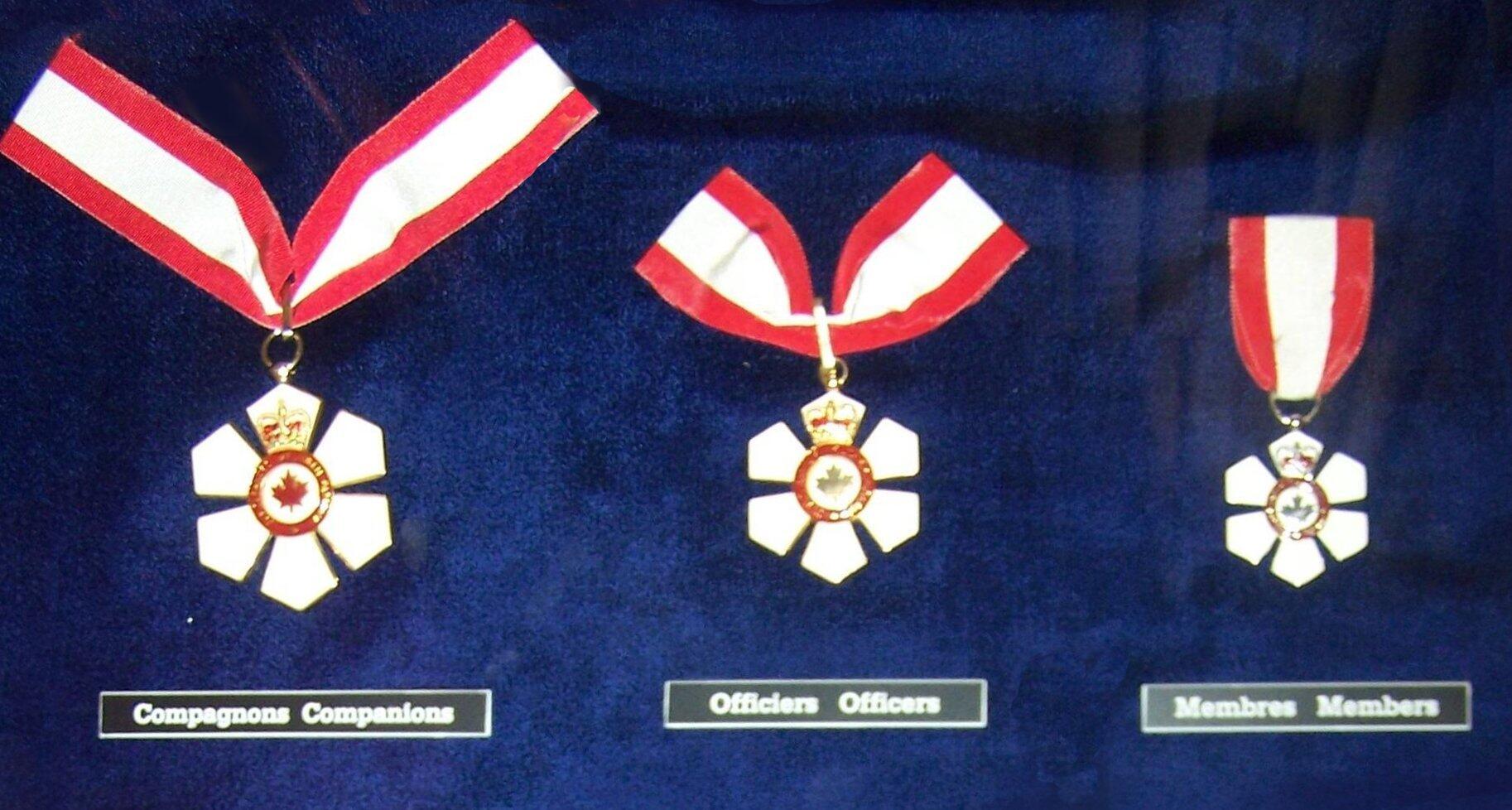
The Order recognises individuals whose achievements and service have made a lasting difference to the country and beyond. It has three ranks—Companion, Officer and Member, with appointments made by the Governor General on the recommendation of an independent advisory council. 1 Each recipient receives a distinctive insignia featuring a stylised snowflake, reflecting Canada’s northern identity.


What is the Order of Canada?
Established in 1967 to mark Canada’s centennial, the Order of Canada is a national honour that is administered through the Governor General’s office across a broad range of fields, ranging from science and the arts to public service, sport, and philanthropy. 2
The monarch is the Sovereign of the Order, while the Governor General serves as Chancellor and Principal Companion and administers the Order. 3
The Order of Canada celebrates individuals who have exceptional professional achievement, strong dedication to community as well as outstanding service to the country, which is in alignment with the Order's motto:
Desiderantes meliorem patriam — They desire a better country.
Ranks, Post‑Nominals, and Who Can Be Appointed
Under the Order of Canada, the Order of Canada has three ranks for its citizens: Companion, Officer and Member.
Source: Governor General of Canada’s official Order of Canada page
Each rank recognises a distinct degree of merit, and each gives its recipient the right to use specific post-nominal letters after their name.
Companion (CC)
Purpose: Recognises outstanding achievement and merit of the highest degree, especially in service to Canada or humanity.
Recipient example: The Right Honourable Louise Arbour, C.C.
A former Supreme Court of Canada justice and United Nations High Commissioner for Human Rights, Arbour has made significant contributions to Canadian justice and international human rights.
She was appointed a Companion of the Order of Canada in 2007 and invested in 2008. 4

Officer (OC)
Purpose: Recognises outstanding achievement and service in areas such as science, culture, public affairs and education.
Recipient Example: Sandra Oh, O.C. The internationally acclaimed Canadian actress is known for her performances in Grey’s Anatomy and Killing Eve.
Appointed an Officer of the Order of Canada in 2022, she was recognised for her achievements in acting and for championing inclusive storytelling in the arts. 5
Member (CM)
Purpose: Recognises distinguished service to a community, group or field of activity, including contributions that may be less widely known but have a substantial local or regional impact.
Recipient Example: Professor Patrick George Croskerry, CM. Recognised for his work to enhance patient care by analysing factors that contribute to diagnostic errors, Dr Croskerry previously served as Dartmouth General Hospital's Emergency Department Chief and Director of Dalhousie's Critical Thinking program. 6
| Rank | Post-nominal | What it recognises | Annual cap |
|---|---|---|---|
| Companion | CC | Outstanding achievement and merit of the highest degree, especially service to Canada or humanity | Up to 15 vacancies per year; ordinary Companions are limited to 180 in total |
| Officer | OC | Achievement and merit of a high degree, especially service to Canada or humanity | Up to 80 per year |
| Member | CM | Distinguished service in or to a particular community, group, or field of activity | Up to 171 per year |
Honorary and Extraordinary Appointments
Honorary honours are not unique to Canada: Members of the Commonwealth like Australia, New Zealand and the UK also recognise foreign nationals for their contributions.
The Order of Canada, however, has a distinctive additional category: extraordinary appointments. 7 It is reserved for members of the Royal Family, serving and former governors general, and their spouses.
| Appointment type | Who it is for | Key distinction | Real recipient example |
|---|---|---|---|
| Honorary appointment | A person who is not a Canadian citizen but has made an outstanding contribution to Canada or humanity. | Based on merit and service, but the recipient is not a Canadian citizen. It is limited to a maximum of five appointments per year. | Alfred E. Slinkard, CM (honorary) — a non-Canadian agricultural scientist recognised in 2020 for developing lentil varieties that transformed farming in western Canada. |
| Extraordinary appointment | Members of the Royal Family, current and former Governors General, | Based on a special royal or constitutional role, not a public nomination or ordinary merit assessment. | King Charles III, then Prince of Wales — appointed an Extraordinary Companion (CC) in 2017 as a Royal Family member. |
| Extraordinary appointment | Current or former Governors General and their spouses. | The Governor General is also the Chancellor and Principal Companion of the Order, so this appointment reflects their official role. | Mary Simon, Governor General of Canada — appointed an Extraordinary Companion (CC) in 2021. |
Important note: Unlike some Commonwealth honours systems, the Order of Canada does not have a separate military division.

Exceptional service by members of the Canadian Armed Forces is recognised through the separate Order of Military Merit, which has three levels:
Commander (CMM), Officer (OMM), and Member (MMM). 8
How Nominations and Selections Work
The Order of Canada has a public nomination process — anyone or any organisation may nominate a Canadian citizen for the Order via the official online portal.
Here's the main parts of the process:
Nomination
- The Advisory Council reviews nominations and makes recommendations to the Governor General.
- The Council includes senior figures from public life, culture, academia, and science, along with Order members appointed by the Governor General. 8
Voting and appointment
- The Council votes on each nomination; a majority is required, although unanimity is not. Its discussions are confidential.
- The Governor General then makes the formal appointment under the Order’s Constitution.
Under the Order’s rules, a person is not eligible for ordinary appointment while serving as a judge of a Canadian court or as an elected member of a provincial legislature or the House of Commons. 9
Step‑by‑step journey from nomination to investiture
Submit a nomination
Send the nomination to the Chancellery of Honours; be sure to include the candidate’s contributions with specific examples.
Research and verification
The Chancellery of Honours will research the nominee’s achievements, and this can take about 12 months.
Advisory Council review
The Advisory Council will assess the nominations, consider the evidence and vote on whether the candidate should be recommended.
Governor General’s appointment
The Governor General formally approves each appointment by signing an official document and sealing it with the Order of Canada’s official seal.
Public announcement
New appointments are generally announced twice a year, around Canada Day on 1 July and around New Year’s Day.
Investiture ceremony
Recipients are formally presented with the insignia of the Order, usually at a ceremony conducted by the Governor General or a designated representative.
You might want to discover new things about the Order of New Zealand.
The Order of Canada Medal (Insignia) and Symbolism
- Six -pointed white snowflake: Represents Canada’s northern heritage; the design dates from 1967 and was created by chief artist Bruce Beatty. 10
- Red circular centre: Contains a stylised maple leaf, a national symbol of Canada.
- Motto:Desiderantes meliorem patriam “They desire a better country”—the guiding idea behind the honour.
- Royal Crown: Shows the Order’s connection to the Canadian Crown.
- Red-and-white ribbon: Reflects Canada’s national colours.
Having said that, the three ranks differ mainly in size, how they are worn, and small design details. 11
| Rank | Size | How it is worn | Design difference |
|---|---|---|---|
| Companion (CC) | Largest: about 56 mm across | Worn around the neck on a ribbon | White enamel with gold edges; gold maple leaf in the centre. |
| Officer (OC) | Medium: about 45 mm across | Also worn around the neck, but smaller | Very similar to the Companion, but with a single gold maple leaf and a sterling gilt frame. |
| Member (CM) | Smallest: about 35 mm across | Worn on the left breast, like a medal | Made of sterling silver, with a silver maple leaf in the centre. |
Post‑nominals and how recipients style their names in formal contexts
Recipients may place the letters associated with their rank after their names in formal contexts:
- CC — Companion of the Order of Canada.
- OC — Officer of the Order of Canada.
- CM — Member of the Order of Canada.
For example, a Member may be styled “Alice Smith, CM” in a formal biography, programme or professional profile. The post-nominal identifies the honour without replacing the person’s name or professional title.
Rules for wearing the insignia
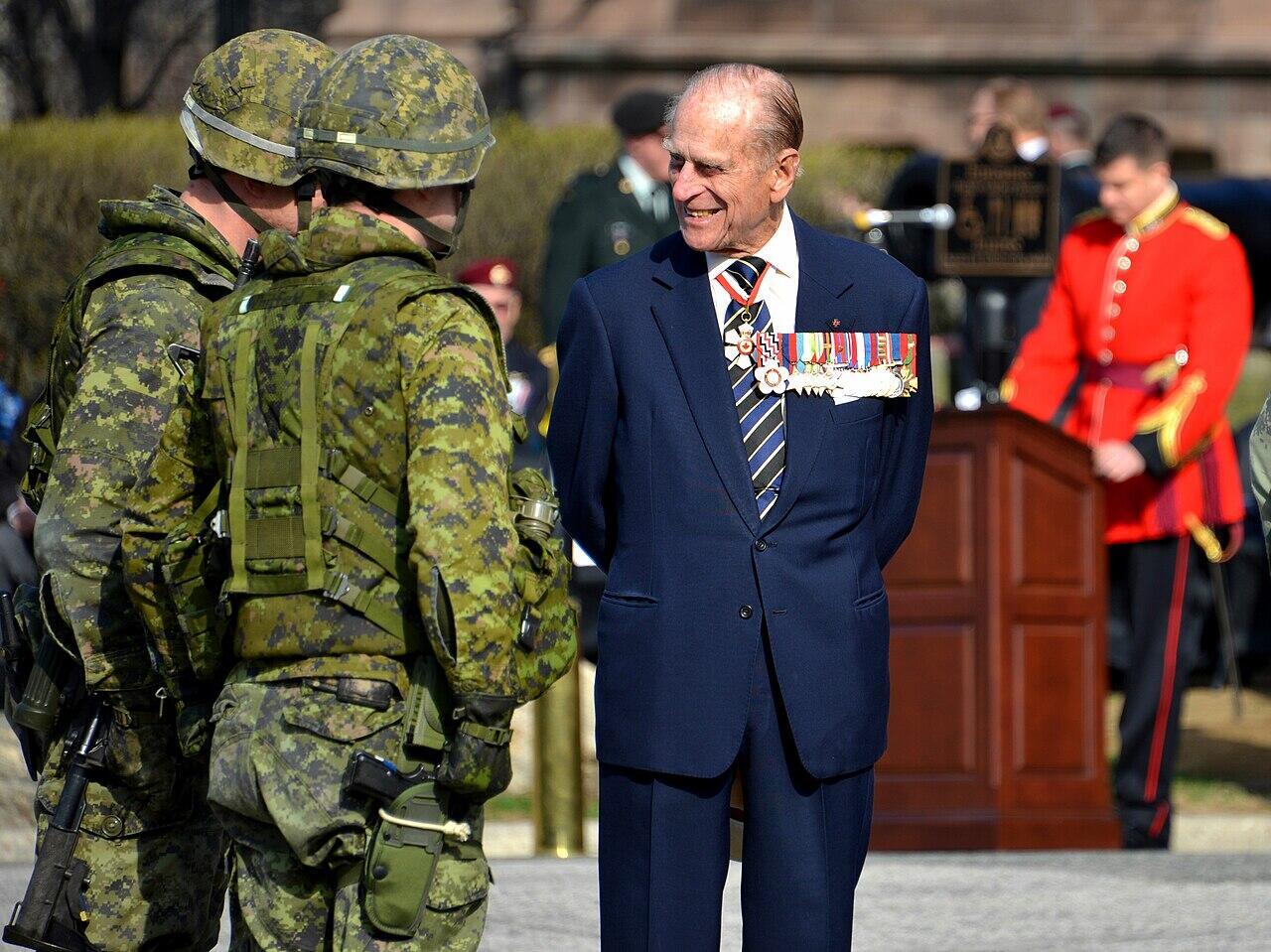
The recipients may wear their Order of Canada insignia during official occasions such as Remembrance Day or state dinners. Full-size insignia are generally worn during the day, while miniature versions are worn at formal evening events.
Companions and Officers wear their badges suspended from a neck ribbon, while Members wear theirs on the left side of the chest.
Where to Find Current Roll of Members & Recent Investitures
The most reliable source for current recipients is the Governor General of Canada’s official Order of Canada directory and information page. It provides information about the Order, its levels and insignia, nominations and recipients.
Learn more about the Order of Australia.
Resignations and Removals: How Membership Can End
One thing worth noting is that membership in the Order of Canada is not necessarily permanent. According to the Constitution, it can cease for these three reasons:
- Death of the recipient
- The Governor General’s acceptance of a written resignation
- Termination by an Ordinance made by the Governor General
Resignation vs Termination (Removal)
| Situation | What happens | Key requirement |
|---|---|---|
| Resignation | The recipient chooses to leave the Order. | They must submit a written resignation to the Secretary General; the Governor General must accept it. |
| Termination | The Governor General removes the person from the Order. | The Governor General must issue a formal Ordinance terminating the appointment. |
| After either | The person is no longer a member and must return the insignia. | The insignia remains the property of the Order unless an Ordinance says otherwise. |
High‑profile removals and why they matter
As of the time of writing, nine people have been removed from the Order of Canada. Recipients may lose the honour if their actions or behaviour damage the reputation of the Order as well as the country.
Some high-profile examples include:
- Alan Eagleson, the former hockey executive, was the first ever recipient to be removed following his criminal conviction for fraud. 12
- Conrad Black, the former media proprietor, was removed after his conviction in the United States for fraud and obstruction of justice. 13
- Buffy Sainte-Marie, a singer-songwriter, was removed recently in 2025 following controversy over claims concerning her Indigenous ancestry. 14
How the Order of Canada Compares to UK Honours
The Order of Canada shares some similarities with the UK honours system, particularly in recognising public service and outstanding achievements. However, it remains a distinct national honour, administered in Canada through the Governor General and the Chancellery of Honours. 15
| Feature | Order of Canada | Selected UK honours, e.g. OBE |
|---|---|---|
| Purpose | Recognises outstanding achievement, community dedication, and service to Canada | Recognises service and achievement across public, civic, and community life |
| Main grades | Companion, Officer, Member | Varies by order; the OBE has grades such as Commander, Officer, and Member |
| Post-nominals | CC, OC, CM | CBE, OBE, MBE, among others |
| Head of the Order | The monarch is Sovereign; the Governor General is Chancellor and Principal Companion | The monarch is Sovereign of many UK orders |
| Administration | Canadian system, administered through Rideau Hall and the Chancellery of Honours | UK honours system, administered through UK authorities |
We hope you've enjoyed learning about the Order of Canada and what sets it apart from other honours systems.
References
- Office. “Levels and Insignia.” The Governor General of Canada, 25 Sept. 2017, https://www.gg.ca/en/honours/canadian-honours/order-canada/levels-and-insignia. Accessed 20 Oct. 2026.
- Office of the Secretary to the Governor General. “Order of Canada.” The Governor General of Canada, 21 Sept. 2017, https://www.gg.ca/en/honours/canadian-honours/order-canada. Accessed 20 Oct. 2026.
- “Order of Canada | the Canadian Encyclopedia.” Thecanadianencyclopedia.Ca, 2019, https://thecanadianencyclopedia.ca/en/article/order-of-canada. Accessed 20 Oct. 2026.
- “The Honourable Louise Arbour.” The Governor General of Canada, https://www.gg.ca/en/honours/recipients/146-7476. Accessed 20 Oct. 2026.
- “Ms. Sandra Miju Oh.” The Governor General of Canada, 2022, https://www.gg.ca/en/honours/recipients/146-9434. Accessed 20 Oct. 2026.
- The Governor General of Canada. “Professor Patrick George Croskerry | the Governor General of Canada.” Www.Gg.Ca, 2025, https://www.gg.ca/en/honours/recipients/146-128443. Accessed 20 Oct. 2026.
- General, Office of the Secretary to the Governor. “Constitution.” The Governor General of Canada, 25 Sept. 2017, https://www.gg.ca/en/honours/canadian-honours/order-canada/constitution. Accessed 20 Oct. 2026.
- Office. “Advisory Council.” The Governor General of Canada, 25 Sept. 2017, https://www.gg.ca/en/honours/canadian-honours/order-canada/advisory-council. Accessed 20 Oct. 2026.
- Office. “Eligibility.” The Governor General of Canada, 28 Feb. 2018, https://www.gg.ca/en/honours/canadian-honours/order-canada/eligibility. Accessed 20 Oct. 2026.
- His Majesty The King in Right of Canada represented by the Office of the Secretary to the Governor General. How to Nominate. 2025, https://www.gg.ca/sites/default/files/media/honours/oc/25_oc_nomination_guide-edit_04.05.2026.pdf. Accessed 20 Oct. 2026.
- “Order of Canada Medal.” Order-of-Canada-50, 2017, https://www.orderofcanada50.ca/insignia. Accessed 20 Oct. 2026.
- CBC. “Eagleson Stripped of His Order of Canada.” CBC, 2 Mar. 2000, https://www.cbc.ca/news/canada/eagleson-stripped-of-his-order-of-canada-1.163674. Accessed 20 Oct. 2026.
- Russell, Andrew. “Conrad Black Stripped of the Order of Canada.” Global News, 31 Jan. 2014, https://globalnews.ca/news/1121958/conrad-black-stripped-of-the-order-of-canada/. Accessed 20 Oct. 2026.
- Friend, David. “Buffy Sainte-Marie Returns Her Order of Canada, Says She Never Denied Having American Citizenship.” CBC, 4 Mar. 2025, https://www.cbc.ca/news/canada/saskatchewan/cp-buffy-returns-order-of-canada-1.7474435. Accessed 20 Oct. 2026.
- Heritage, Canadian. “Honours and Military Symbols - Canada.Ca.” Canada.Ca, 2023, https://www.canada.ca/en/canadian-heritage/services/honours-military-symbols.html. Accessed 20 Oct. 2026.
Summarise with AI:
Did you like this article? Leave a rating!

 Loading...
